
Maybe you just bought a house with a wood stove in the living room and a manual nobody kept. Maybe you heat with wood every winter and want to burn cleaner. Either way, you ended up here because the advice out there is thin, vague or trying to sell you something.
Ember and Cord exists to fix that. We write practical guides on heating with wood in the US and Canada, from choosing a stove to stacking the last row of the season. Heat with wood, do it right.
Why this site exists
Wood heat is simple in principle and easy to get wrong in practice. The wrong stove size, wood at 30 percent moisture or a clearance guessed instead of measured can cost you heat, money or worse.
Our mission is to replace vague advice with numbers you can act on. When we say seasoned, we mean below 20 percent moisture on a meter reading. When we say keep your distance, we give you the figure, such as 36 inches (91 cm) to an unprotected wall, and tell you where that figure comes from.
We follow the real woodburning year. Buying and splitting advice lands in spring, burning and troubleshooting in winter, chimney and ash cleanup when the season ends. You get the information when you actually need it, not six months late.
Key takeaways
- Every guide opens with a Quick answer box: the number, the rule or the decision, before you read another word.
- Concrete figures replace vague wording, from cord dimensions to clearance examples.
- Safety guidance is grounded in NFPA 211 and CSA B365, and your stove label and manual always come first.
- Problem articles walk cause, check, fix and when to call a CSIA or WETT certified professional.
- Tables for BTU per cord, drying times and clearances let you compare at a glance.
How we approach every guide
We write the way a good chimney sweep talks: calm, direct and honest enough to say don't. Green wood, an oversized stove, a DIY install you are not qualified for. If it is a bad idea, the guide says so plainly.
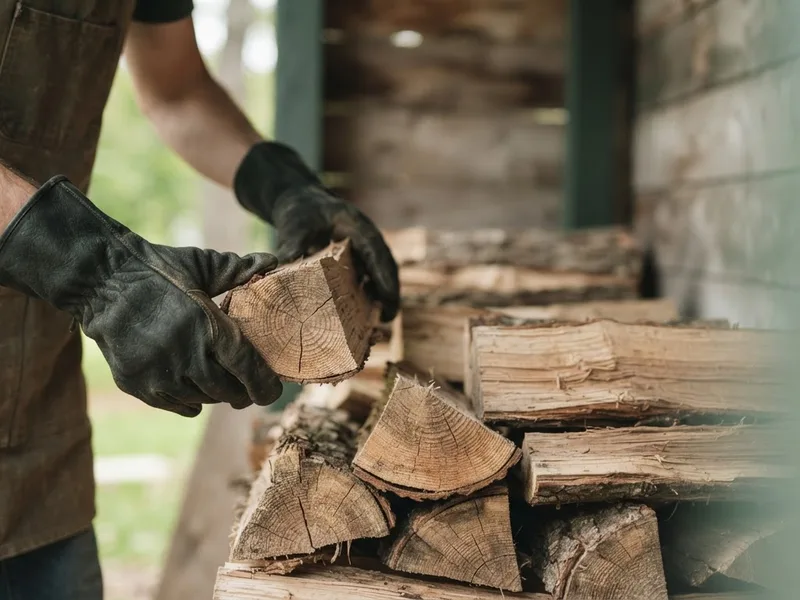
Trade terms get explained in plain words the first time they appear. A face cord is a single row of split wood, usually 16 inches (41 cm) long, stacked 4 feet high and 8 feet long (1.2 by 2.4 m). A listed chimney is one tested and approved for the job. After that, we skip the jargon.
We also mark the line where DIY ends. Checking your own door gasket is fine. Relining a chimney is a job for a certified professional, and we will tell you which certification to ask for.
Who this is for
New owners of houses with a stove or fireplace who inherited the hardware but not the know-how. You will find the basics first: what you have, whether it is safe to use and what to do before the first fire.
Rural and suburban households who want wood as backup heat. Sizing a stove, storing a full cord, keeping the insurance company satisfied. We cover the decisions in the order you will face them.
Longtime burners who want a cleaner, more efficient burn. Secondary combustion, draft problems, creosote habits. The guides go deeper than the stove forum guesses.
Everything is written for both the US and Canada, with imperial units first and metric in parentheses, and with the differences in rules and standards spelled out where they matter.
Start with the Quick answer
Every guide opens with the number, the rule or the decision you came for. If that is all you need, you are done.
Read the why behind it
Below the answer we explain the reasoning, the standard it comes from and the exceptions that might apply to your setup.
Check your label and manual
Your stove label and manual always come first. Where they differ from a general rule, the label wins. We say so in every article.
Know when to call a pro
Problem guides end with a clear handoff point. If the fix is beyond safe DIY, we point you to a CSIA or WETT certified professional.
Questions about your setup?
Every stove, chimney and wood pile is a little different. If a guide did not cover your situation, or you want to know what to read first, send us a note.